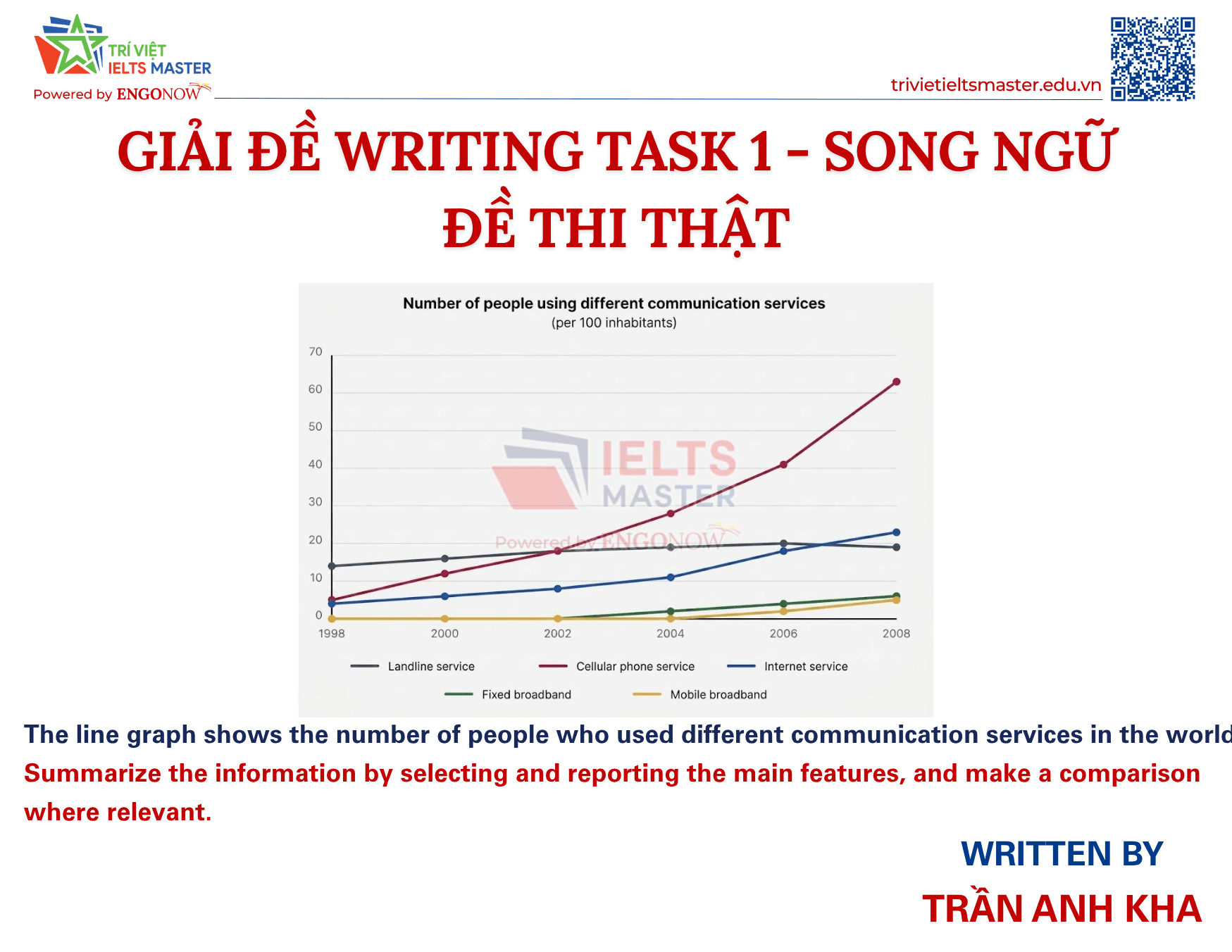
The chart below shows the aid from six developed countries to developing countries from 2008-2010. Summarize the information by selecting and reporting the main features, and make a comparison where relevant.


TASK 1 OUTLINE
I. Introduction (Mở bài)
Sử dụng từ đồng nghĩa hiệu quả: “aid” => “funded”, “developing countries” => “developing nations”. Câu văn ngắn gọn, trực tiếp.
II. Đoạn Tổng quan (Overview)
Tách làm 2 ý rõ ràng: Ý 1 nói về xu hướng tăng/giảm chung (“net increases… exception of Sweden”). Ý 2 so sánh độ lớn (“US… largest donor” vs “Sweden… lowest”).
Sử dụng mệnh đề rút gọn “seeing a decline” để câu văn mượt mà, tránh lặp chủ ngữ.
III. Detail Paragraph 1 “Nhóm Giảm-rồi-Tăng (Mỹ, Đức, Nhật)”:
Topic Sentence: Xác định ngay điểm chung của nhóm này: “shared a roughly similar funding pattern: declining to a low… before rising again”.
Supporting/Data: Tác giả mô tả Mỹ trước (số liệu lớn nhất), dùng các từ chỉ biến động tinh tế (“marginal fall”, “recovery”). Sau đó gộp Đức và Nhật vào một câu ghép để so sánh (“started with the same level…”, “rebounded”).
Hiệu quả: Xử lý gọn gàng 3 nước trong 1 đoạn mà không rối rắm nhờ việc tìm ra điểm tương đồng.
IV. Detail Paragraph 2 “Nhóm Tăng-rồi-Giảm (Hà Lan, Thụy Điển)”:
Topic Sentence: Dùng cấu trúc liên kết “though differing in overall trends, also shared a similar trajectory” để chuyển ý mượt mà từ đoạn trên.
Supporting/Data: Miêu tả sự tương đồng ở điểm xuất phát (“similar at first”) và điểm đỉnh (“respective peaks”).
Contrast: Kết đoạn bằng sự so sánh độ dốc của việc giảm (“sharper decline”) để làm nổi bật sự khác biệt nhỏ giữa hai nước này.
V. Detail Paragraph 3 “Nhóm Tăng đều (Anh)”:
Topic Sentence: Dùng “In contrast” để tách biệt xu hướng của Anh so với 5 nước còn lại.
Development: Không chỉ nêu số liệu tăng (“rose steadily”), tác giả còn nhấn mạnh sự thay đổi về thứ hạng (“shifting the UK from being the second-lowest to the second-highest”). Đây là một điểm cộng lớn (Band 8+) vì cho thấy khả năng phân tích sâu sắc hơn là chỉ đọc số.
SAMPLE:
The bar chart illustrates how much six different developed countries funded developing nations between 2008 and 2010.
Overall, there were net increases in financial assistance from most of the countries examined, with the exception of Sweden, seeing a decline, and Japan, virtually levelling off. Additionally, the US was consistently by far the largest donor, in stark contrast to Sweden, which was generally the lowest throughout.
Despite showing different overall trends, the US, Germany, and Japan shared a roughly similar funding pattern: declining to a low in 2009 before rising again in 2010. Specifically, the US donated approximately $21 billion to developing countries in the first year, with a subsequent marginal fall to around $18 billion in 2009 as well as a final recovery, rising further to $25 billion. Meanwhile, Germany and Japan started with the same level of support, at around $11 billion, and also saw declines the following year, reaching $10 billion and $8 billion, respectively. However, by the final year, both figures had rebounded, with Germany’s increasing further to $12 billion, while Japan’s revisited its initial level.
The Netherlands and Sweden, though differing in overall trends, also shared a similar trajectory, which somewhat contrasted with that of the US, Germany, and Japan, as mentioned above. Funding to developing nations from the Netherlands and Sweden was similar at first, at about $6 billion, followed by a marked rise to their respective peaks of $8 billion and $7 billion. However, by 2010, both countries had reduced their donations, with Sweden seeing a sharper decline, ending at $5 billion compared to the Netherlands’ $7 billion.
In contrast, the UK was the only country to increase its aid package consistently each year. Its contributions to developing nations rose steadily from $8 billion in 2008 to $12.5 billion in 2010, shifting the UK from being the second-lowest to the second-highest donor at the end of the period.
Xem thêm: [WRITING – SONG NGỮ] BÀI MẪU ĐỀ THI THẬT IELTS WRITING TASK 2 – NGÀY 29/08/2024